Booked here
The jungle day
12 hours, everything in one
- Length12 hours
- GuideEnglish, Spanish, Portuguese
- DolphinsProject and a swim
Guides
Language
Currency
Find open datesfrom $140 · free to cancelSize up your group price
One-day jungle experience from Manaus
★ 4.8 · 485 ratings
Quick summary
Manaus jungle tours include our Amazon day trip of 12 hours, with a trek of 3 hours, a dolphin project, piranha fishing, a sunset ride and a night search for alligators.
Day essentials
Compare 4 side by side
Set the number of travelers and compare the Manaus trips side by side.
≈
View≈
View≈
View≈
ViewStarting prices as on the booking platform, converted at the ECB reference rate. You see the exact price at booking.
A single long day from Manaus packs a trek, a lunch, a dolphin project, piranha fishing, a sunset ride and a night search for caimans. Here is the order of the day, what to wear and what changes with the seasons.
Editorial team, pinkdolphinsamazon.quest · Updated November 12, 2026 · 6 min of reading
Summary view
This is the Manaus Amazon jungle tour sold on this site: a day of 12 hours that starts with pickup at the hotel at about 8 am and ends with a return at about 8 pm. A local partner runs it, and live guides speak English, Spanish and Portuguese, with private or small groups bookable. The fare starts from $140, and the record gives no group size or inclusions list beyond lunch.
The day is a sampler. It strings together a drive west of the city, a canoe, a jungle trek, a simple lunch, a stop at a dolphin protection project, piranha fishing, a ride until sunset and a night search for alligators. Each piece is a taste of the rainforest rather than a deep dive, which suits a first visit.
Reviewers on GetYourGuide rate it well. It has 485 reviews averaging 4.8, and the breakdown reads guide 4.9, transportation 4.8, value for money 4.8. Those scores describe this listing only, and a similar-sounding day from another operator can feel quite different, so read the stops and not just the title.
The day at a glance
| Stop | Timing | Bring |
|---|---|---|
| Hotel pickup | About 8 am | Day bag |
| Drive to Castanho lake | About 1 hour | Water, snacks |
| Jungle trek | 3 hours | Long pants, closed shoes, repellent, raincoat |
| Lunch | Simple meal | Nothing extra |
| Dolphin project | After lunch and a rest | Swimsuit and towel |
| Piranha fishing and sunset | Before sunset | Sunscreen and a hat |
| Night ride | After dark | A flashlight if you like |
| Return | About 8 pm | Dry clothes |
Order and clothing as the listing records them; the exact times depend on the season and the day.
The day begins with pickup at your hotel at approximately 8 am, and the listing asks you to check availability for the pickup details when you reserve. The road leads west from Manaus for about 1 hour to Castanho lake, where your host is waiting. From there the group boards a motorized canoe and heads toward the jungle, and the canoe is a simple wooden boat with no cover over it.
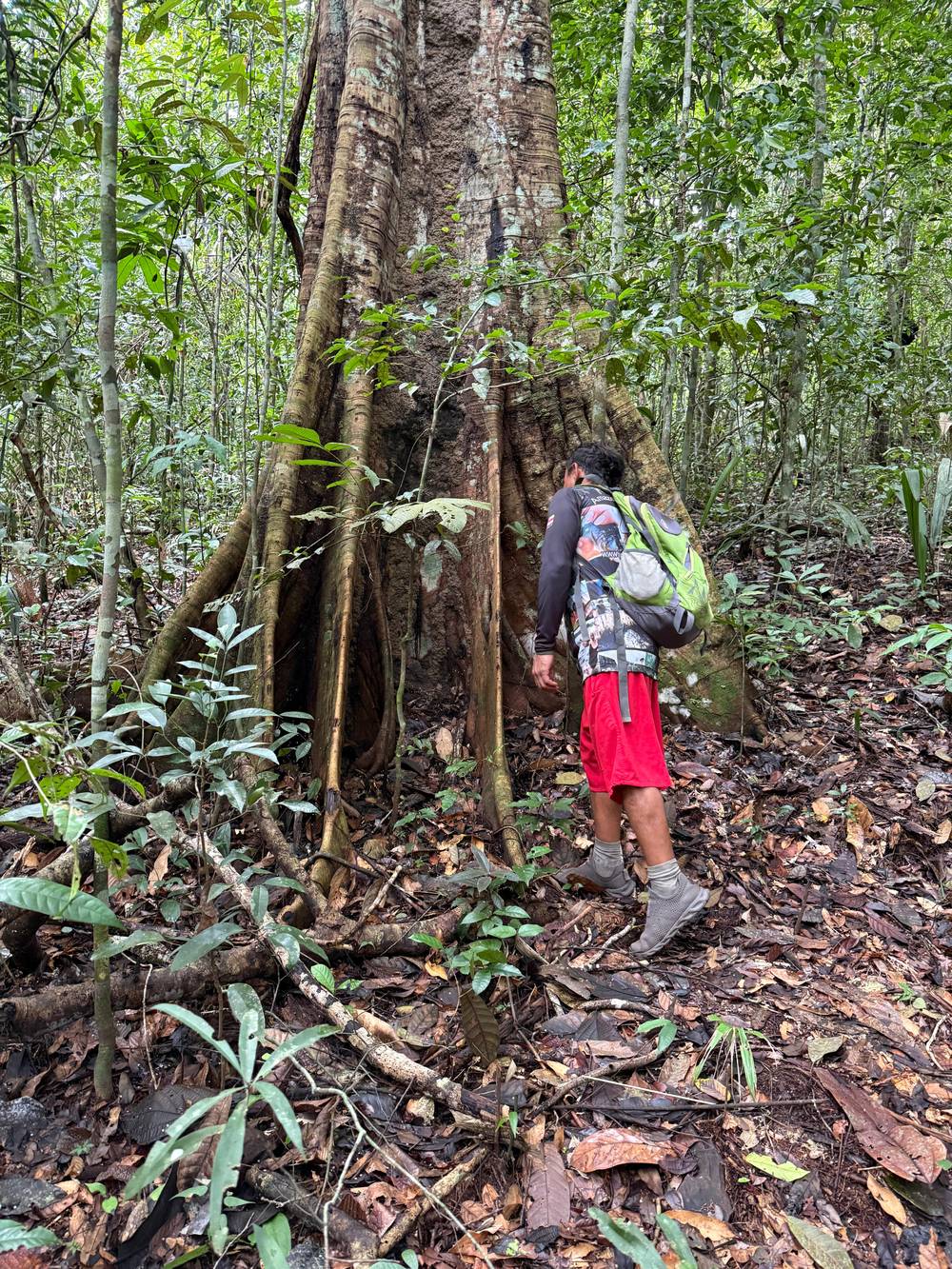
The first main activity is a trek of 3 hours in the forest. The guide explains the local fauna and flora, medicinal plants and jungle survival techniques. Expect mud, roots and heat as you go. The same record says the Amazon region is hot, rainy and humid, and the trek takes place in exactly those conditions.
The listing is specific about clothing for this stage. For the trek the listing requires long pants and closed-toe shoes, plus repellent and a raincoat. Bring a spare shirt for the afternoon as well, and keep your phone and wallet in a sealed bag, since rain, spray and sweat reach everything in an open canoe. Wear something that can get muddy and dry quickly.
What guests rate
The listing breakdown on GetYourGuide, from 485 reviews averaging 4.8.
Lunch follows the trek, and it is a plain, filling meal rather than a restaurant menu. The record calls it simple and lists what to expect: rice, beans, spaghetti, manioc flour and vinaigrette. It also says the lunch is a chance to learn about local culture and Amazonian cuisine. Travelers with strict diets should contact the operator before booking.
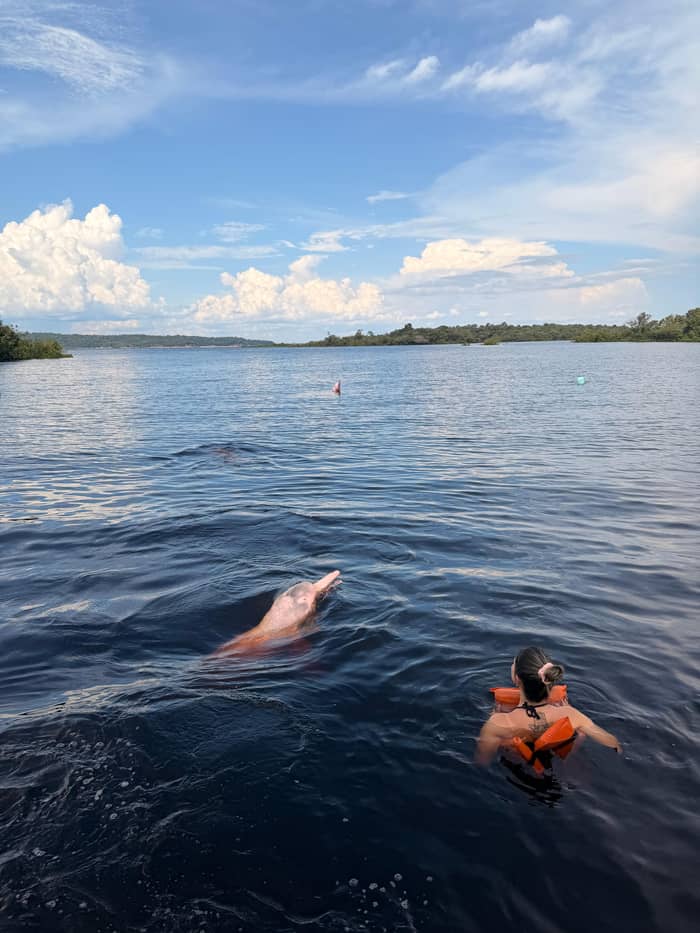
After a rest, the canoe goes out again to the dolphin protection project. Guests learn about the animals and the conservation work, and have the chance to enter the water with them. If you are curious how pink dolphins in the Amazon jungle live and where else they are found, our guide to where to see them covers the range and the river seasons.
Bring swimsuits and towels for this stop, as the listing asks. Our swimming guide explains what Brazilian sources say about touching and feeding, and we would encourage you to read it first. Today, ICMBio says, dolphin tourism on the lower Rio Negro depends on handing out food, and its researchers are developing gentler ways to meet the animals.2,3 Ask your guide to explain how the stop is run.
Pick your trip
Tell us how long and how strenuous a day you want and see the trip that fits.
If I have one full day
The jungle day
12 hours with a trek, dolphins, piranhas and a night ride.
If I want a night in the jungle
The 2-day river tour
A night in a no-frills room with a net, from $420.
If I have only half a day
The Negro half day
It takes 4.5 hours and starts from $110.
If I use a wheelchair or walk with difficulty
A river day
The half day is marked wheelchair accessible.
If I arrive on a cruise ship
The jungle day
A ship group can agree a different start with the partner.
Choose your length
Booked here
12 hours, everything in one
Overnight
A night in a simple guest room
Short option
A short outing on the river
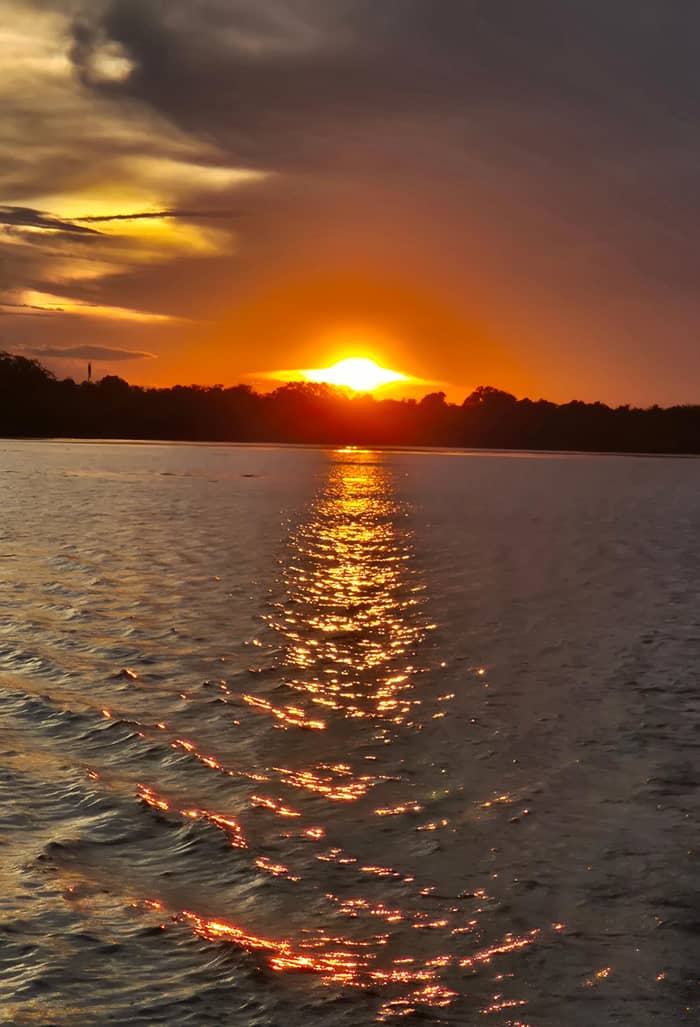
After the dolphins the canoe takes a ride through the flooded forest to fish for piranhas. The ride continues until sunset, and the canoe has no roof, so the listing asks for sunscreen and a hat. The assessment of the boto lists igapó, the flooded forest, as one of the habitats of the species, which gives a sense of what you are paddling through.4
As night falls the group goes out again to search for alligators and other nocturnal wildlife. A flashlight is optional, according to the listing. ICMBio notes that tourist interactions with caimans in the lower Rio Negro currently involve the temporary capture of the animals, and its research project aims to reduce the negative impact of such interactions.2,3 If handling is offered, ask how the animal is treated.
Then it is back to the car and the road to Manaus, arriving at the hotel at about 8 pm. That makes the full day 12 hours, a long time to spend in an open canoe and a car, so eat and drink before the night ride and use the toilet at the lunch stop. If your ship sails early, the local partner can set a different start time for your group.
Hour by hour
About 8 am
The local partner collects you at the hotel in Manaus.
About 1 hour
The road leads west of the city, where your host waits.
Next, 3 hours
Fauna, flora, medicinal plants and survival techniques.
After the trek
Rice, beans, spaghetti, manioc flour and vinaigrette.
After a rest
The conservation project, where you may get into the water.
Then
A boat ride through the flooded forest to fish.
As night falls
A ride until sunset, then a search for alligators.
About 8 pm
The return to the hotel in Manaus.
The river sets the programme. The listing says some activity places may change across the wet months, November to June, and the dry months, July to October. In the dry season the Rio Negro falls, and on one October day in 2023 it stood at 13.29 m at Manaus, a 121-year low.5 A lower river can change which channel the canoe takes.
Rain does not stop in the dry months, so the dry season is no guarantee of sunshine. The long-term INMET means for the Manaus station show measurable rain in July, August and September alike.6,7,8 The listing asks for a raincoat, and because the canoe has no roof a shower arrives in full, so keep a rain layer within reach, not packed away.
For the dolphins, the river state matters too. Boto calves are mostly born as the river drops and fish bunch up, and the breeding season lasts from July to October.9 The animals also move between lakes of flooded areas and the main river, so a guide who knows the water that week can place the dolphin stop better than a printed itinerary.10
Video
Fredrik Lundberg on YouTube · The video stays unloaded until you press play.
The proposal seeks new ways of interacting with these animals through qualified, low-impact activities that contribute to the welfare of the species.
Pack for the day
The day is long and physical. The listing itself notes that with limited mobility the tour may not be suitable, and it points to a river day tour that may be better. The Negro River half day is marked wheelchair accessible in its record and lasts 4.5 hours. Check which day suits each person in your party before you reserve.
If you want more time, a 2-day version exists, and the listing says so. A 2-day river tour from Manaus offers a night in a simple guest room with a bed, a mosquito net and a private toilet, and it starts from $420. It is not the same trip, since the record covers a different route, but it shares the trek, the dolphins, the piranhas and the caimans.
Before you go, think about health. The travel advice of the UK government suggests checking the latest vaccination guidance for Brazil at least 8 weeks ahead, and it names yellow fever, dengue and high UV among the health risks.11 Booking is simple: reserve now and pay later, with free cancellation up to 24 hours in advance for a full refund.
FAQ
Pickup is at about 8 am and the return to the hotel is at about 8 pm.
The record lists a trek of 3 hours, lunch, a dolphin protection project, piranha fishing, sunset and a night search for alligators.
The listing asks for long pants, closed-toe shoes, insect repellent and a raincoat.
The record describes a simple lunch with rice, beans, spaghetti, manioc flour and vinaigrette.
Wet months run November to June and dry months July to October, says the listing.
It notes that the tour may not suit limited mobility and points to a river day tour.
A 2-day river tour starts from $420 and includes a night in a simple guest room.
Sources
Wondering how a day with the pink dolphins works? Ask a real person here.