Look up your stop

Where to see pink dolphins in the Amazon around Manaus

Quick summary

Where to see pink dolphins in the Amazon near Manaus: the lower Rio Negro with its lakes and creeks, Castanho lake about an hour west and a research platform at Sao Thome.

Where to look

  • The range spans the Amazon basin rivers1
  • 99% of groups sighted hold one to four animals2
  • An INPA platform stands 80 km from Manaus9

View 16 stops

The pink dolphin's rivers on the map

Select a route, then tap a marker or stop to see its note and open Google Maps.
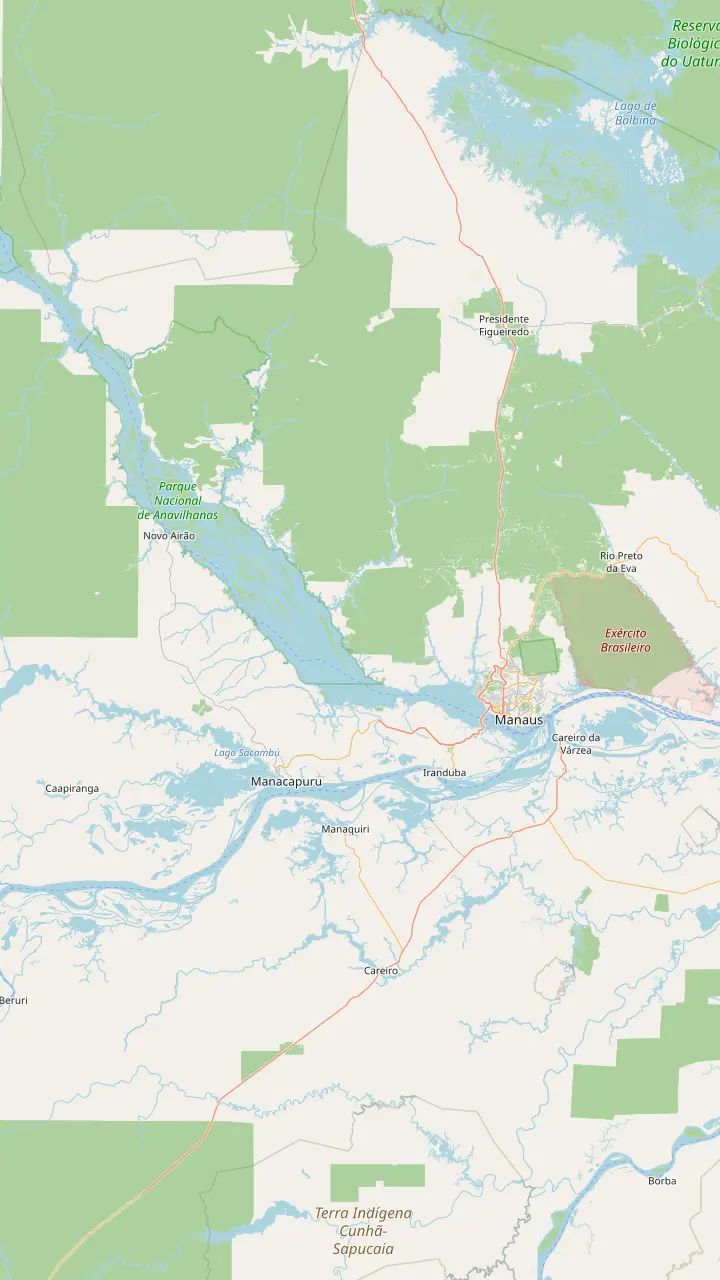
Map of the Manaus area on the Rio Negro with the port, the Meeting of the Waters, the Lago do Tupé reserve, the town of Iranduba, the São Thomé community, Manacapuru, Novo Airão and Anavilhanas National Park
  1. Manaus's public port on the Rio Negro, shown as the city's reference point on the map.

    Google Maps
  2. The place where the Rio Negro and the Solimões run side by side near Manaus; a 9-hour listing includes it among its highlights.

    Google Maps
  3. ICMBio lists the Lago do Tupé reserve among the protected areas of Amazonas where the boto occurs; the pin marks the waterfall area of the lake.

    Google Maps
  4. The town of the municipality where INPA opened a floating platform for responsible dolphin viewing in 2015, 80 km from Manaus.

    Google Maps
  5. INPA's Amigo do Boto-vermelho platform stands in a riverside community of this name; the pin marks the locality of São Thomé in Iranduba.

    Google Maps
  6. ICMBio places direct capture of botos for bait in the Manacapuru region, a reminder that the animals near Manaus are under pressure.

    Google Maps
  7. On the Rio Negro, where interaction with botos at a floating restaurant became the town's main tourist attraction.

    Google Maps
  8. A national park of about 400 islands on the Rio Negro, in which ICMBio lists the boto.

    Google Maps
Map data: © OpenStreetMap contributors

The boto lives across a vast river basin, but a visit comes down to a few lakes, creeks and platforms near Manaus. Here is where they are, how the river changes the picture and what to expect.

Editorial team, pinkdolphinsamazon.quest · Updated November 12, 2026 · 6 min of reading

Summary view

  • Their rangeThe boto lives in the Amazon basin rivers of Brazil, Peru, Colombia, Ecuador, Bolivia, Venezuela and Guyana.1
  • Closest to ManausOur jungle day drives about 1 hour west to Castanho lake and continues by canoe.
  • Where they gatherGatherings are frequent at flooded backwaters and at meetings of waters.2
  • River seasonsThe wet season runs November to June, the dry season July to October.
  • Group sizeIn central Amazonia, 99% of groups sighted had one to four animals.2

Where the pink river dolphin lives

The pink river dolphin, called the boto in Brazil, is an animal of the Amazon river system. The conservation agency ICMBio places it across the basins of northern South America, in countries from Guyana to Bolivia, Brazil among them.1 People ask: are there pink dolphins in the Amazon river? Yes, and INPA describes a wide distribution in the rivers of the Brazilian, Bolivian, Colombian, Ecuadorian and Venezuelan Amazon.3

Inside Brazil, the same assessment lists the basins of the Amazonas, Branco, Negro, Madeira, Tapajós and Xingu rivers.4 For a visitor to Manaus the practical answer is the lower Rio Negro, the dark river the city sits beside, and the lakes, channels and creeks that run off it. Those are the waters where the tours in this guide go looking.

The range is more than the main channel. The assessment lists igapó, várzea and rivers, which cover the flooded forest, the seasonally flooded floodplain and the channels themselves.5 It also says the animal lives at higher density near the river banks and where tributaries meet the main river.6 That fits the places the Manaus tours name: lakes, creeks and the junction of rivers near the city.

Places to look

Where the tours and platforms meet the boto

PlaceHow it is describedSource
Castanho lakeAbout 1 hour west of Manaus, then a canoeOur jungle day
Lake AcajatubaBy boat on the Rio NegroSmall-group trip
Jacareubau CreekSpeedboat ride of 20 to 30 minutesLodge trip
Negro River beachDolphin project upstreamHalf day
São Thomé, Iranduba80 km from Manaus9INPA platform
Novo AirãoMain tourist attraction of the town10ICMBio researcher

Distances and rides as each listing or source states them.9

Where tours near Manaus meet the dolphins

The dolphin stops that Manaus listings describe cluster on the lower Rio Negro. Our jungle day drives about 1 hour west of the city to Castanho lake and then continues by motorized canoe. A small-group dolphin trip sails the Rio Negro to Lake Acajatuba, and the 3 or 4-day cruise up the Rio Negro lists a swim with the dolphins at the same lake.

A lodge-based trip on the Anavilhanas side reaches a floating deck on Jacareubau Creek by speedboat from the village of Cachoeira do Castanho, a ride of 20 to 30 minutes that varies with the level of the waters. The half day on the Negro River heads upstream to a dolphin project beside a white sand river beach. Several stops share one stretch of river, and each operator runs its own.

Not every stop sits this close. INPA built a research platform called Amigo do Boto-vermelho at São Thomé, a riverside community in the municipality of Iranduba, 80 km from Manaus.9 And in Novo Airão, the gateway to the Anavilhanas National Park, direct contact with the boto is described by an ICMBio researcher as the main tourist attraction of the town, and that contact dates from 1997, when a feeding habit began at a riverside restaurant.10,11 Both are separate outings from a day on the Manaus side.

Rain on the water

Mean rain at Manaus in the dry months

  • July67.1
  • August56.1
  • September79.0

Monthly means for 1991 to 2020 at the INMET station in Manaus.12,13,14

High water, low water and where the animals go

The river does the planning here. Our jungle day listing cautions that some activity places can change between the wet season (November to June) and the drier months (July to October). Another listing says a speedboat ride to a floating deck runs 20 to 30 minutes, and the time varies with how high the water stands. The same operator can take a different route in two different weeks.

Amazon river dolphin habitat changes shape with the river, and the boto itself is built for a flooded landscape. INPA describes a biology fully adapted to move in the flooded forest.3 The assessment adds that the dolphins of the middle Amazon may be structured around lake systems in flooded areas, with intense movement between those systems and the main river.18 The animals move, and a guide who knows the river that week counts for more than a fixed address.

Low water has its own rhythm. Most calves are born as the water falls and fish crowd together, and the breeding season runs from July to October, peaking in September.7 The river can fall far: in October 2023 the Rio Negro at Manaus reached 13.29 m, a mark not seen in 121 years of records.8 The federal geological service has run an alert system for the basin since 1989 and publishes a weekly bulletin, which is worth a look before a dry-season trip.17

Pick a place

Which dolphin spot suits your trip

Say what matters and see where to look for the boto.

  • If I want the closest stop to Manaus

    Castanho lake day

    About 1 hour west of the city on our jungle day.

  • If I want a setting with posted rules

    The research float

    INPA built it to regulate visiting hours and set rules.15

  • If I have a day and want a platform swim

    A river day

    A day of 7 hours that ends the lunch break with a platform swim.

  • If I travel in the dry months

    Check the river first

    The federal geological service publishes weekly bulletins.17

  • If I prefer to watch from the canoe

    The full river day

    Its record lists canoe dolphin observation on the day.

Kinds of stop

Tour platform, research float or park float

Tour stop

Tour platform

A stop inside a river day

  • SettingFloating platform
  • TouchingNot allowed on one record
  • Day length7 hours
See the jungle day

Research

Research float

INPA platform at São Thomé

  • Distance80 km from Manaus9
  • AimLow-impact rules15
  • SignsPortuguese and English16
See the jungle day

National park

Park float

Novo Airão, Anavilhanas

  • IslandsAbout 40010
  • Contact since199711
  • RoleMain town attraction10
See the jungle day

What a sighting looks like from a canoe or platform

Expect a quiet animal rather than a pod. The boto is rather solitary, and a survey in central Amazonia found that 99% of the groups sighted had one to four animals.2 Large gatherings at flooded backwaters and at meetings of waters are frequent, but a single dolphin rolling beside the canoe is the more usual picture.

Two settings dominate the tours. One is a floating platform, where one record has guests swimming close to the dolphins and bars touching. The other is a protection project where guests may enter the water, as our jungle day describes. In both, the animals are wild and come and go on their own terms, so the length of a sighting varies from stop to stop.

Their habits shape what you see. A boto comes up for air at regular intervals yet can remain submerged for extended periods, and its biosonar guides it to fish and around obstacles.30 On a canoe watch that means brief glimpses of a back or a head, then nothing for a while. Patience pays off more than following a dolphin around the lake.

The river year

Seasons, breeding and the low-water record

  1. November to June

    Wet season

    The jungle day listing names these months as the wet season.

  2. July to October

    Dry season

    The same listing names these months as the dry season.

  3. July to October

    Breeding season

    Breeding is seasonal across these months.7

  4. September

    Birth peak

    Births peak when fish are most concentrated.7

  5. October 2023

    River low record

    The Rio Negro at Manaus reached 13.29 m, a 121-year low.8

The dry months and the weather on the water

Our jungle day listing calls the climate hot, rainy and humid and asks guests to come prepared. Rain is lightest in the dry season. At the INMET station in Manaus the 1991 to 2020 mean is 67.1 mm in July, 56.1 mm in August and 79.0 mm in September.12,13,14 Those are monthly means, so a single afternoon can still bring a downpour.

The canoe on our jungle day is a simple wooden motorized boat with no cover, so sun and rain both reach you. The listing asks for a raincoat, sunscreen and a hat, and a swimsuit and towel for the dolphin stop. Pack a dry bag or a plastic sleeve for a phone, and dress for sun first and rain second, since both reach you in an open boat.

Timing within the day is set by the operator. On our jungle day the dolphin project follows the lunch and comes before the piranha fishing and the ride until sunset, so it sits in the middle of the outing rather than at its start or end. The same listing suggests a river day tour for travelers with limited mobility.

Video

Pink dolphins and the Meeting of the Waters in Manaus

Eyo Dada on YouTube · The video stays unloaded until you press play.

The boto is an animal of rather solitary habits, although large gatherings in flooded backwaters and at meetings of waters are frequent.
Instituto Chico Mendes de Conservacao da Biodiversidade (ICMBio, gov.br), SALVE species assessment2

Plan the sighting

What to check before you go

Before you book3

  • Which lake or creek the stop uses this season
  • Whether the dolphin stop is a platform or open water
  • Free cancellation up to 24 hours before the jungle day

In the canoe3

  • Sunscreen and a hat, since the canoe has no roof
  • A raincoat for a sudden shower
  • Patience: the animals surface briefly and go under30

If you want more3

  • A separate outing to the INPA platform, 80 km away9
  • Ask a guide how the river level changes the route
  • Read the swimming guide before you enter the water

Choosing where to go for the dolphins

If you want the simplest route from Manaus, pick a day that includes the dolphin stop and let the operator handle the water and the boat. If you want a setting with explicit rules, the INPA platform was designed to regulate visiting hours and set low-impact rules for the interaction.15 Its bilingual signs explain the species, its habitat and what threatens it.16

It helps to know that the setting varies. INPA noted that four other floating platforms in Amazonas offer contact with botos, but that none of them had regulated hours or information on the species.31 An ICMBio working group argued that boto tourism belongs inside conservation units, approved and monitored by the body that manages them.32 Ask the operator how the stop is managed.

Finally, remember that this is wildlife. The assessment notes that in various Amazonas localities botos are drawn in and domesticated as a tourist magnet.33 A good stop is one where the animals choose to be there and the guide keeps the group calm. The swimming guide on this site explains the rules, and the photography guide covers how to capture the moment without crowding the animal.

FAQ

Straight answers to common questions.

Are there really pink dolphins in the Amazon?
Yes, across the whole basin.

ICMBio lists several countries of northern South America as the range, Brazil and Peru among them.1

Where near Manaus can you see pink dolphins?
On the lower Rio Negro.

Listings name Castanho lake, Lake Acajatuba, Jacareubau Creek and a project beside a white sand beach on the Negro River.

Do pink dolphins swim in groups?
Mostly alone or in small groups.

In central Amazonia, 99% of the groups sighted had one to four animals.2

Can you see pink dolphins in the dry season?
Yes, and breeding peaks then.

Breeding runs from July to October with a peak in September, and births peak when fish are most concentrated.7

What are igapó and várzea?
Flooded forest and floodplain.

The assessment lists igapó, várzea and rivers as the boto habitat.5

Is there a research platform near Manaus?
Yes, at São Thomé.

INPA and a partner opened a floating platform there, 80 km from Manaus.9

Do the places change with the season?
Yes, for some activities.

The jungle day listing says places may change between the wet season (November to June) and the dry season (July to October).

Sources

  1. Instituto Chico Mendes de Conservacao da Biodiversidade (ICMBio, gov.br), SALVE species assessment · Inia geoffrensis (de Blainville, 1817), ficha da especie ↩
  2. Instituto Chico Mendes de Conservacao da Biodiversidade (ICMBio, gov.br), SALVE species assessment · Inia geoffrensis (de Blainville, 1817), ficha da especie ↩
  3. Instituto Nacional de Pesquisas da Amazonia (INPA) · Ampa e Inpa inauguram casa flutuante para pesquisas e atividades de interacao com o boto-vermelho ↩
  4. Instituto Chico Mendes de Conservacao da Biodiversidade (ICMBio, gov.br), SALVE species assessment · Inia geoffrensis (de Blainville, 1817), ficha da especie ↩
  5. Instituto Chico Mendes de Conservacao da Biodiversidade (ICMBio, gov.br), SALVE species assessment · Inia geoffrensis (de Blainville, 1817), ficha da especie ↩
  6. Instituto Chico Mendes de Conservacao da Biodiversidade (ICMBio, gov.br), SALVE species assessment · Inia geoffrensis (de Blainville, 1817), ficha da especie ↩
  7. Instituto Chico Mendes de Conservacao da Biodiversidade (ICMBio, gov.br), SALVE species assessment · Inia geoffrensis (de Blainville, 1817), ficha da especie ↩
  8. Servico Geologico do Brasil (SGB) · Rios Negro, Solimoes e Amazonas registram novas minimas historicas ↩
  9. Instituto Nacional de Pesquisas da Amazonia (INPA) · Flutuante Amigo do Boto-vermelho oferece ecoturismo responsavel e auxilia pesquisa para conservacao da especie ↩
  10. Instituto Chico Mendes de Conservacao da Biodiversidade (ICMBio, gov.br) (article by an ICMBio researcher, Ciencia Hoje, May 2011) · Botos e turistas em risco ↩
  11. Instituto Chico Mendes de Conservacao da Biodiversidade (ICMBio, gov.br) (article by an ICMBio researcher, Ciencia Hoje, May 2011) · Botos e turistas em risco ↩
  12. Instituto Nacional de Meteorologia (INMET) · Manaus (AM): boletim climatologico de julho/2023 ↩
  13. Instituto Nacional de Meteorologia (INMET) · Balanco de Manaus (AM) em agosto de 2023 ↩
  14. Instituto Nacional de Meteorologia (INMET) · Balanco de setembro de 2023 em Manaus (AM) ↩
  15. Instituto Nacional de Pesquisas da Amazonia (INPA) · Flutuante Amigo do Boto-vermelho oferece ecoturismo responsavel e auxilia pesquisa para conservacao da especie ↩
  16. Instituto Nacional de Pesquisas da Amazonia (INPA) · Flutuante Amigo do Boto-vermelho oferece ecoturismo responsavel e auxilia pesquisa para conservacao da especie ↩
  17. Servico Geologico do Brasil (SGB) · Alerta de Vazante: analise do cenario indica que rio Negro em Manaus pode ter cotas entre 12,31 m e 16,50 m, no pico da seca ↩
  18. Instituto Chico Mendes de Conservacao da Biodiversidade (ICMBio, gov.br), SALVE species assessment · Inia geoffrensis (de Blainville, 1817), ficha da especie ↩
  19. ICMBio (Chico Mendes Institute for Biodiversity Conservation, Brazil), SALVE system · Inia geoffrensis (boto-vermelho): species assessment (Portuguese PDF, 2018)
  20. INPA (National Institute of Amazonian Research) · Flutuante Amigo do Boto-vermelho oferece ecoturismo responsável (2015)
  21. ICMBio (Chico Mendes Institute for Biodiversity Conservation, Brazil), SALVE system · Inia geoffrensis (boto-vermelho): species assessment (Portuguese PDF, 2018)
  22. ICMBio, article by an ICMBio researcher in Ciência Hoje (2011) · Botos e turistas em risco (Portuguese PDF)
  23. ICMBio, article by an ICMBio researcher in Ciência Hoje (2011) · Botos e turistas em risco (Portuguese PDF)
  24. IUCN Red List of Threatened Species · Inia geoffrensis, Amazon River Dolphin (assessment 2018)
  25. IUCN Red List of Threatened Species · Inia geoffrensis, Amazon River Dolphin (assessment 2018)
  26. ICMBio (Chico Mendes Institute for Biodiversity Conservation, Brazil), SALVE system · Inia geoffrensis (boto-vermelho): species assessment (Portuguese PDF, 2018)
  27. ICMBio (Chico Mendes Institute for Biodiversity Conservation, Brazil), SALVE system · Inia geoffrensis (boto-vermelho): species assessment (Portuguese PDF, 2018)
  28. IUCN Red List of Threatened Species · Inia geoffrensis, Amazon River Dolphin (assessment 2018)
  29. IUCN Red List of Threatened Species · Inia geoffrensis, Amazon River Dolphin (assessment 2018)
  30. Instituto Chico Mendes de Conservacao da Biodiversidade (ICMBio, gov.br) (article by an ICMBio researcher, Ciencia Hoje, May 2011) · Botos e turistas em risco ↩
  31. Instituto Nacional de Pesquisas da Amazonia (INPA) · Flutuante Amigo do Boto-vermelho oferece ecoturismo responsavel e auxilia pesquisa para conservacao da especie ↩
  32. Instituto Chico Mendes de Conservacao da Biodiversidade (ICMBio, gov.br) (article by an ICMBio researcher, Ciencia Hoje, May 2011) · Botos e turistas em risco ↩
  33. Instituto Chico Mendes de Conservacao da Biodiversidade (ICMBio, gov.br), SALVE species assessment · Inia geoffrensis (de Blainville, 1817), ficha da especie ↩

Before you leave

Keep a seat for the jungle day.

Reserve the jungle day now and pay later; cancel free up to 24 hours before the start.

Find open spots