Story
The legend
The young man in white
See the optionsGuides
Language
Currency
Find open datesfrom $140 · free to cancelChoosing helper
A day on the legend's river
Pick the kind of day, and a listing appears with its from-price.
Your ideal pick
from $110
It lists 4.5 hours with a local indigenous tribe and a white sand river beach.
Your ideal pick
from $140
It lists the meeting of the waters, a floating village and a ride through flooded forest.
Your ideal pick
from $140
It lists a night ride in search of alligators and other nocturnal wildlife.
On party nights, goes the story, a pink dolphin walks out of the river as a young man in white. Here is the legend, the beliefs around it, the festivals that stage it and what it has to do with the real animal.
Editorial team, pinkdolphinsamazon.quest · Updated November 12, 2026 · 6 min of reading
Summary view
The pink dolphin legend of the Amazon is among Brazil's best-known folk stories. On party nights, the boto leaves the river and turns into a young man dressed in white, with a hat to hide the hole on top of his head, the part of him that never changes.1 A federal transport department publication tells it the same way: a handsome young man in white clothes and a hat that covers his large nostril, who seduces the young women of the village.5
In the story the young man is charming and persuasive. He picks out a woman who is at the dance without company and persuades her to go with him into the river, where, the tale says, he makes her pregnant.2 When the day breaks he turns back into a boto and disappears, leaving the woman to return home alone. Versions differ from community to community, but the core is stable: a river lover who comes at night and leaves at dawn.
The legend has a pull that goes beyond romance. The pink dolphin folklore of the Amazon gives the pink dolphin a reputation as an enchanter of women, and the word encantado, enchanted, is a key idea of Amazon river belief.6,7 A dolphin that rises beside a canoe at dusk and looks at the people in it is easy to imagine as someone else in disguise, which may be why the story has lasted.
The story piece by piece
| Element | What the tale says | Source |
|---|---|---|
| The character | A young man in white clothes5 | Federal transport department |
| The disguise | A hat to hide the hole on his head1 | ICMBio article |
| The victim | A woman at the party without company2 | ICMBio article |
| The place | The river waters2 | ICMBio article |
| The ending | At dawn he is a boto again2 | ICMBio article |
| The children | Called daughters of the boto3 | ICMBio article |
The elements come from an ICMBio article and a federal transport department text; versions vary by community.1,5
The legend was not only entertainment. In isolated communities of the Amazon it has been used to explain a pregnancy outside marriage or a case where the father is unknown, and the children are then called filhas do boto, daughters of the boto.3 The phrase is still used in the region, which tells you how deeply the story is embedded in daily life. Visitors should handle this side of the legend with care. The sources describe how the story is used and say nothing about when or why it began, so a guide who tells you the exact origin of the legend is giving you an opinion, not a fact. Both the ICMBio article, written for a science magazine, and the transport department text retell the same core tale, with the hat, the dance and the river.
Keep this in mind in a tourist setting. The legend is real folk culture, and it belongs to riverside families with their own memories and sensitivities, some of them painful. A pregnancy outside marriage was and is a delicate matter in small communities, and the tale has been used to talk about it indirectly. Listen to it as a story offered by the people who tell it, and avoid turning it into a joke at the expense of a woman or a family.
A night in the legend
Party night
He changes into a young man in white.1
At the dance
It hides the hole that gives him away.1
The invitation
He persuades her to enter the river waters.2
Dawn
At daybreak he turns back and vanishes.2
Months later
The child is called filha do boto in isolated communities.3
The legend sits inside a wider set of beliefs. Interviews with residents of Lake Amanã found that the boto is generally feared, since it is considered to hold supernatural powers.8 People described it as an animal that can follow canoes, scare people, enchant them or take them to the encantados, its city under the water.7 In that picture the river is not only a place where fish live but a place with another, hidden world.
The same interviews recorded a belief linked to candomblé, in which the spirits of the boto haunt the living by using their bodies, which are called aparelhos.9 Some residents also share the widespread Amazonian belief that the animal becomes a white man who seduces girls.13 These are not mere curiosities: they show that the dolphin is treated with respect and some caution in many communities, which helps explain the tales that surround it.
A visitor will find that belief and science do not collide on the river. A guide may say the boto is an encantado and then explain, in the same breath, that it is an endangered animal with 28 teeth per half jaw.14,15 Both statements belong to the same river. Ask your guide which stories their own family tells, because a family version may differ from the printed version, and listening to it is part of the trip.
Layers of boto culture
Story
The young man in white
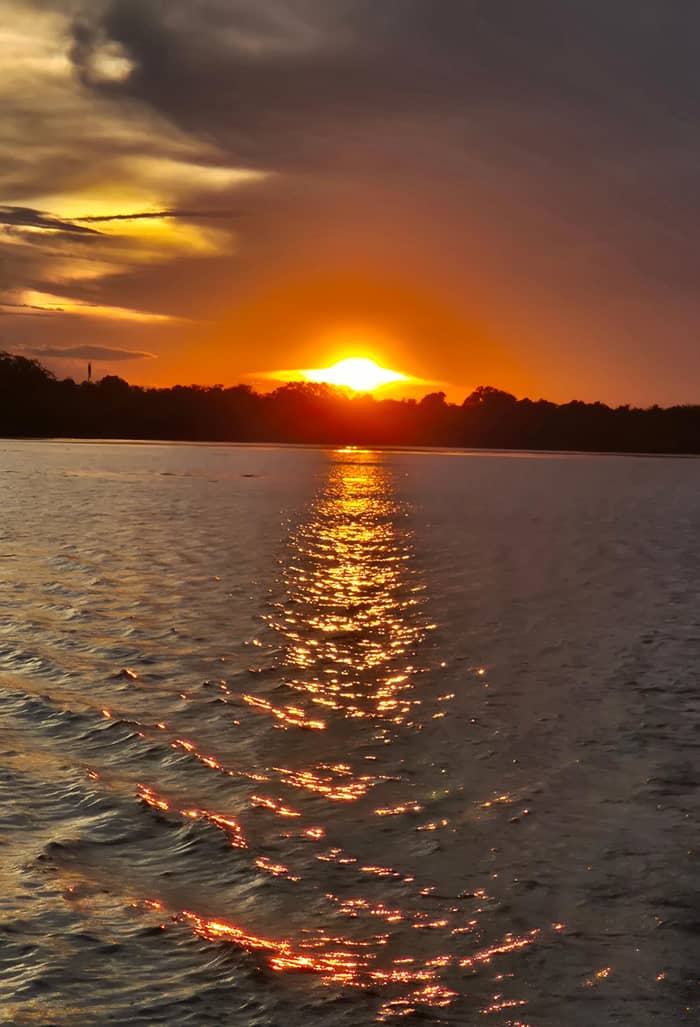
See the options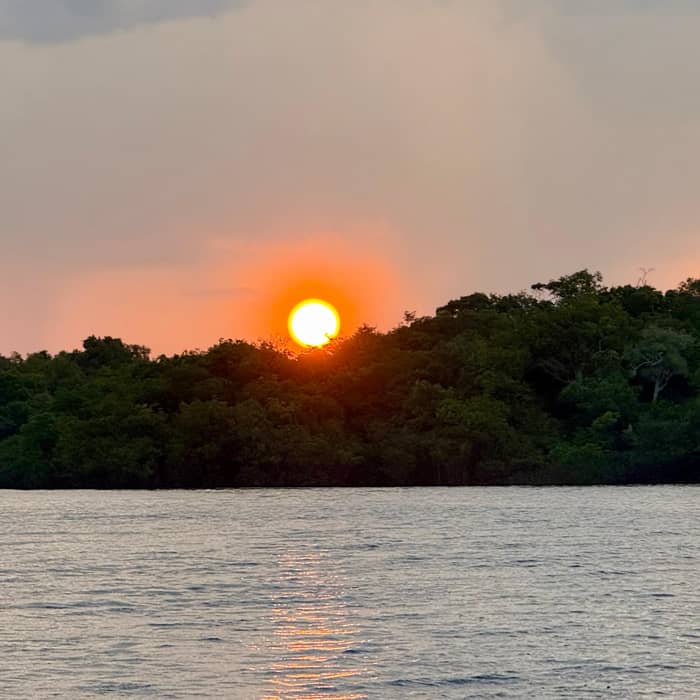
Belief
Encantados and spirits
See the options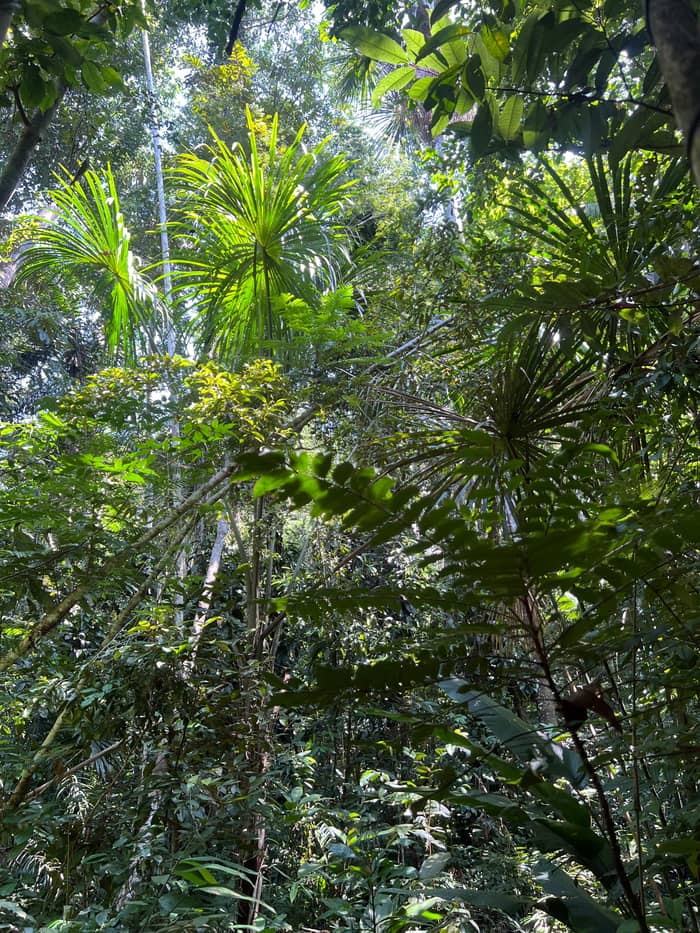
Festival
Boto Tucuxi and Boto Cor de Rosa
See the optionsThe animal's names carry some of the legend. Brazilians call it boto, boto-vermelho, boto-cor-de-rosa or boto da Amazônia.18 The IUCN's English names are Amazon River Dolphin and Pink Dolphin, and its scientific name is Inia geoffrensis.19 When you ask what the pink dolphin is called, the answer depends on who is speaking and whether the person is thinking of the animal or of the character from the story.
The tucuxi, the smaller grey dolphin of the same river system, has its own names and its own fame, though it is not the animal of the legend.20 At the Sairé festival in Alter do Chão, both dolphins are the emblems of rival groups, the Boto Tucuxi and the Boto Cor de Rosa, whose artistic shows in 2025 drew more than 15,000 people on a Saturday night.4 The festival is a good example of how a river animal became a symbol of a whole culture.
Go to the boto's river
Adjust the party size to see what a day on the legend's river costs.
Compare 3 side by side
Adjust the party size to see what a day on the legend's river costs.
≈
View≈
View≈
ViewStarting prices as on the booking platform, converted at the ECB reference rate. You see the exact price at booking.
The boto appears in public life as much as in stories. In the communities of Nova Geração and São Sebastião do Igapó-Açu, at km 260 of highway BR-319, residents are often seen bathing alongside the boto in the late afternoon, according to the transport department that wrote about them.11 The community holds a yearly Festa do Boto Cor-de-Rosa do Igapó Açu around August, with activities on environmental preservation and social responsibility.10
The department chose the boto-cor-de-rosa as a mascot of that highway, to appear in its social communication and environmental education material.21 That is a remarkable fact: an animal that is the star of a legend about seduction is also the face of a campaign on road safety and the environment. Both roles fit together because they both show the boto as something local people know and value.
Treat such scenes with caution. A dolphin that comes close to people who bathe in its river is a different matter from a platform that sells fish portions, where researchers have documented problems for the animals.17 A resident living beside the dolphins for years is part of the picture; a stream of visitors with food is not. The feeding page of this site goes into the difference in detail.
Video
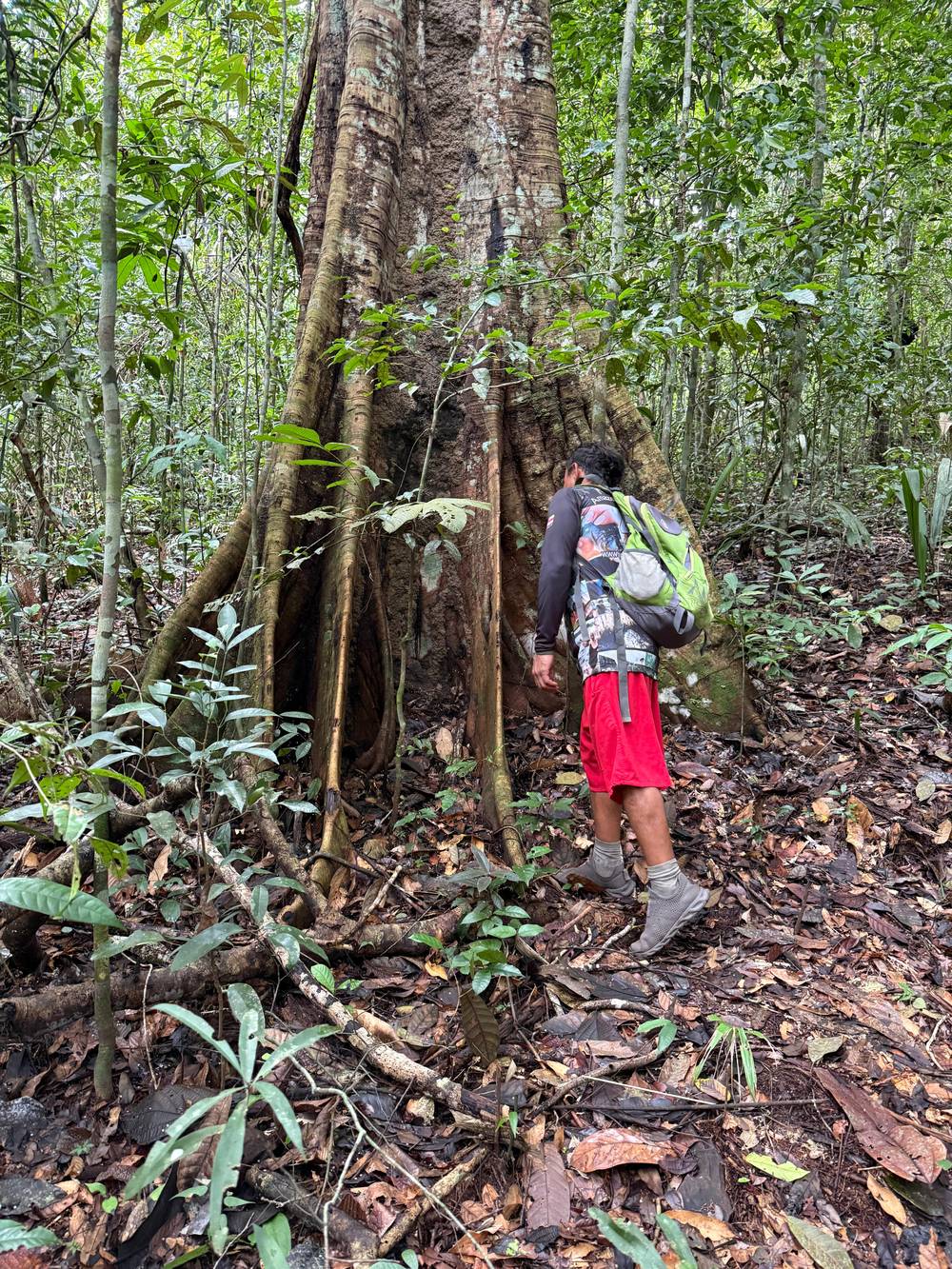
See U in History on YouTube · The video stays unloaded until you press play.
these products are mainly either from domestic animals such as pigs and sheep
Meeting the legend
The folk character is not the animal, and the gap matters. In real life the pink dolphin is an Endangered species, assessed as such by the IUCN in 2018, and the main human threat is killing for fish bait, not any story.15,22 The same markets sell love charms said to be made from boto eyes and genitals, yet molecular testing has traced most of them to farm animals or to coastal Guiana dolphins, not to botos.12 Selling those charms breaks federal law, and so does hunting any cetacean.12,23 The legend and the charm market belong to the same folklore, but only the folklore is harmless. A traveller who buys a souvenir described as dolphin-derived may be supporting a trade that harms animals, and the product is likely not what it claims to be.
If the legend draws you to the river, take it as an invitation to look, not to touch. The 12-hour tour sold on this site names a dolphin swim among its highlights, and any such stop should follow the rules explained on the swimming page. Take the quiz at the top to find a trip that fits the time you have, then keep the encounter gentle and the dolphin wild, because the animal owes nobody a sighting.
FAQ
On party nights the boto steps out of the river as a young man in white, hiding the hole on his head under a hat.1
Brazilians also say boto-vermelho, boto-cor-de-rosa or boto da Amazônia.18
In some communities, the legend explains a pregnancy with an unknown father, and the children are called filhas do boto.3
Residents of Lake Amanã describe it as the underwater city to which the boto can take people.7
Items sold as boto parts mostly turn out to be from farm animals or coastal dolphins.12
Yes, it is rated Endangered by the IUCN (2018 assessment).15
Sources
Wondering how a day with the pink dolphins works? Ask a real person here.