Look up your stop

The Amazon river dolphin: size, range and the river it lives in

Quick summary

The Amazon river dolphin is the boto, the largest of the river dolphins, and it lives in the rivers of the Amazon and Orinoco basins.

Know before you look

  • Males 2.55 m, females 2.25 m1
  • Endangered since the 2018 IUCN assessment3
  • Most are within 150 m of the bank20

View 16 stops

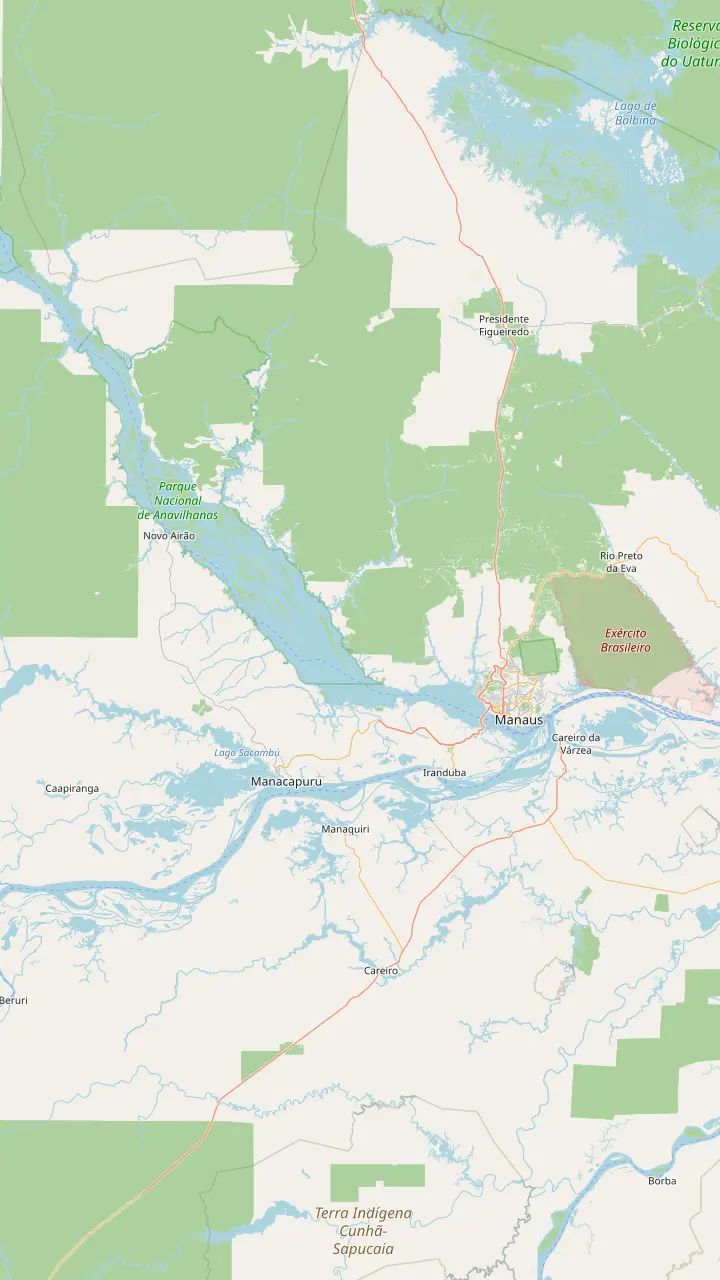
The pink dolphin's rivers on the map

Select a route, then tap a marker or stop to see its note and open Google Maps.
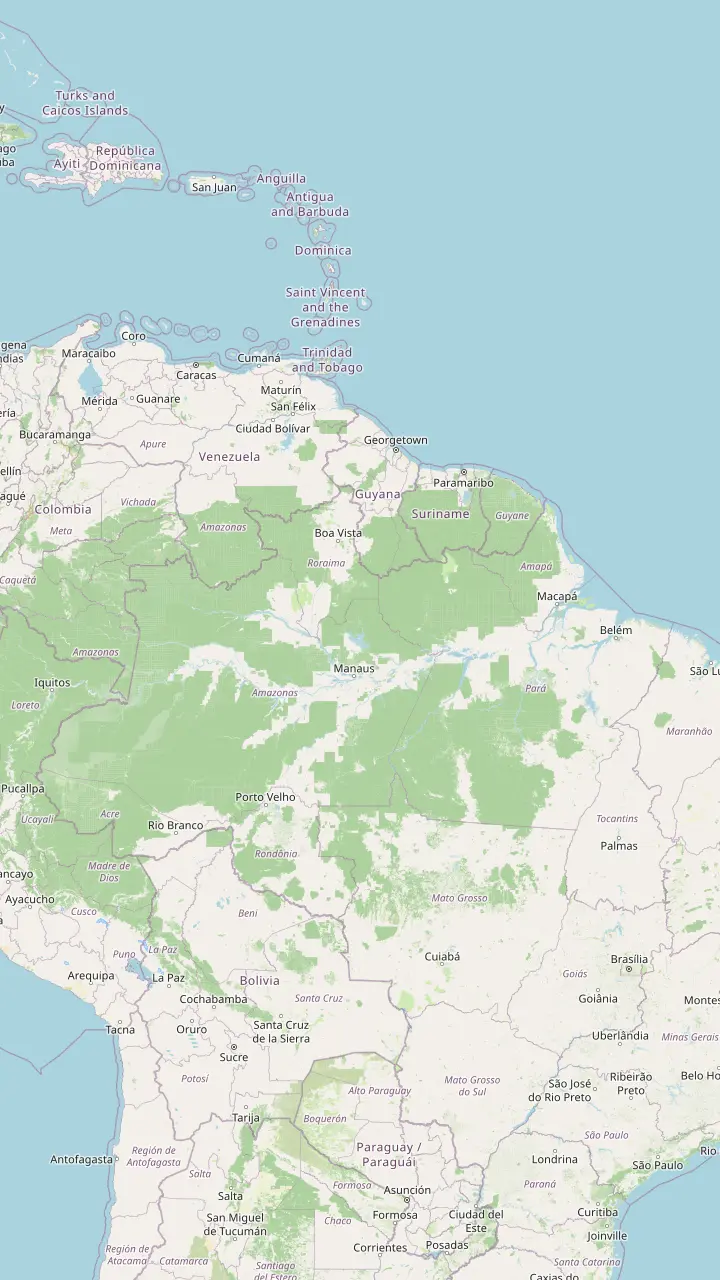
Map of northern Brazil and neighbouring countries with places on the boto's rivers: Tabatinga on the border, the Mamirauá reserve, Tefé, Manaus, Santarém, Porto Velho, Mocajuba on the Tocantins and Puerto Ayacucho on the Orinoco
  1. The border town where Brazil meets Colombia and Peru; ICMBio traces direct capture of botos for bait from here to below Manaus.

    Google Maps
  2. The reserve where long-running surveys recorded a fall of 70.4% over 22 years in an index area.

    Google Maps
  3. At least 176 dolphins were estimated to have died here in 2010 from interactions with fisheries.

    Google Maps
  4. The city used as the reference point of this guide, at the meeting of the rivers where the Amazon basin form of the boto is found.

    Google Maps
  5. On the Tapajós; ICMBio places direct capture of botos for bait in the river near this city.

    Google Maps
  6. On the Madeira river, where ICMBio says the Jirau and Santo Antônio dams are isolating dolphin populations.

    Google Maps
  7. On the lower Tocantins, where unregulated feeding and touching of wild dolphins by visitors and locals has been documented.

    Google Maps
  8. On the Orinoco; dolphins occur above and below the rapids here, which may or may not separate the Amazon and Orinoco populations.

    Google Maps
Map data: © OpenStreetMap contributors

The boto is the largest of the river dolphins and the pink animal people mean when they ask about dolphins in the Amazon. This guide gives its size, its range, its water year and the places to look for it around Manaus.

Editorial team, pinkdolphinsamazon.quest · Updated November 12, 2026 · 9 min of reading

Summary view

  • SizeAdult males reach 2.55 m and 200 kg, females 2.25 m and 155 kg.1
  • RangeRivers of the Amazon and Orinoco basins in northern South America.2
  • StatusEndangered on the IUCN Red List, assessed in 2018.3
  • CompanyMostly alone or in small groups; 99% of sightings in the central Amazon were small groups.4
  • TeethOf 2 kinds, 28 teeth in each half of the lower jaw.5

What the pink dolphins in the Amazon are

Ask what the pink dolphins in the Amazon are and the answer is a single animal, the boto, Inia geoffrensis. The IUCN gives it the English names Amazon River Dolphin and Pink Dolphin, while in Brazil it goes by boto-vermelho, boto-cor-de-rosa, boto da Amazônia or plain boto.6,7 It is the largest of the river dolphins, a true dolphin of fresh water, and it lives its whole life in rivers, lakes and flooded forest rather than in the sea.8

The Amazon basin is home to 2 dolphins that look and behave very differently. Besides the boto there is the smaller tucuxi, a grey dolphin of the same rivers that reaches about 1.5 m and nearly 60 kg.9,10 Keep the pair apart by size and colour: the boto is the bigger, pinker animal and the tucuxi the smaller, greyer animal. If you see a pink back with a long snout and a low ridge instead of a tall fin, you are looking at a boto. A small grey dolphin that leaps clear of the water is usually a tucuxi.

Scientists still argue about how many species the boto group holds. ICMBio recognises 3 subspecies, spread over the Orinoco basin, the Amazon basin and the Bolivian rivers above the Madeira rapids, while the IUCN assessment follows a list with a single species and 2 subspecies and notes a separate species described from the Araguaia and Tocantins rivers.11,12 For a traveller this means the dolphin of Manaus is the Amazon-basin form, which the Brazilian assessment calls Inia geoffrensis geoffrensis.11

Size side by side

How the boto compares with the tucuxi

AnimalLengthWeight
Adult male boto2.55 m maximum1200 kg1
Adult female boto2.25 m maximum1155 kg1
Boto, older ICMBio article2.5 m10185 kg10
Tucuxi1.5 m10Nearly 60 kg10

Lengths and weights are the maximums the sources give; the ICMBio publications differ a little for the boto, so both are shown.1,10

How big are pink dolphins?

The boto is big for a river animal. Adult males reach a maximum body length of 2.55 m and about 200 kg, while females reach 2.25 m and about 155 kg.1 The difference between the sexes is marked: adult males are clearly larger and more robust than females, which is why a group on a platform can look like a mix of different species.8 An older ICMBio article quotes a slightly lower ceiling of 2.5 m and 185 kg, so treat the top end as a range rather than a fixed number.10

Size at birth is small by comparison, which is normal for a dolphin that needs a long time to grow. A calf is born after a pregnancy of an estimated 12.3 to 13 months, with a single calf each time, and measures about 78 to 90 cm, averaging 84 cm.18 Males mature later than females. A male is sexually mature from 10 years, once he measures 190 to 200 cm, while a female can breed from 7 years at 170 to 180 cm.19

The table and the chart on this page set these numbers beside the tucuxi so you can judge what a boto looks like in the water. Remember that a dolphin seen from a canoe shows only its back, a blowhole and a snout, so the true size is easy to under-guess. The animals that surface alongside a boat near Manaus are often the big males, whose pink colour makes them the easiest to spot in dark water.

The biggest river dolphin

Maximum length in metres

  • Boto, adult male2.55 m
  • Boto, adult female2.25 m
  • Tucuxi1.5 m

Maximum body lengths from the ICMBio assessment of the boto and an ICMBio article on the tucuxi.1,10

A body built to turn in flooded forest

The boto's body is designed for tight spaces, and each feature has a job in a river full of obstacles. The 7 neck vertebrae are not fused, which lets the head move in every direction, and the gaps between the other vertebrae make the whole body unusually flexible for a dolphin.21 That flexibility matters when the river floods the forest and an animal has to weave between roots and trunks in search of fish.14 Its dorsal fin is a long, low ridge shaped like a boat keel, which also helps it slip under branches.22

The teeth tell a feeding story. Each half of the lower jaw holds 28 teeth of 2 kinds, 10 pairs shaped like molars at the rear and 18 pairs of big cones at the front.5 A mouth with both sharp and crushing teeth can handle fish of different shapes and, as the diet guide on this site explains, even the hard armour of some prey.23 The eyes are small, but the animal sees well both in and out of the water.24

In murky water, sight is only part of the picture, and the boto relies on another sense as well. Both Amazon river dolphins use biosonar to find fish and to orient themselves under water.25 The result is an animal that hunts by sound in rivers where a human swimmer cannot see their own hand. Its skin carries marks as well: intense encounters between individuals leave scars, and researchers can use the scars to tell dolphins apart in photographs.26

Where to look

Which part of the river should you scan?

Tell us what you hope to see, and the right water follows.

  • If I want to see the biggest animals

    The main river channel

    Most adult males are in the main rivers.15

  • If I want to see mothers with calves

    Lakes and flooded forest at high water

    Females with calves favour those quieter places.15

  • If I am visiting at low water

    The mouth of a side channel

    Dolphins often gather below channel confluences.13

  • If I only have a short boat ride

    The river margins

    Most sightings fall within 150 m of the bank.20

  • If I want to meet a dolphin on a tour

    A day trip with a dolphin stop

    The 12-hour day names a dolphin project among its highlights.

The boto's forms

The recognised subspecies

The Manaus form

Amazon basin form

Inia geoffrensis geoffrensis

  • RiversAmazon basin11
  • CountriesBrazil, Colombia, Peru, Ecuador11
  • Seen near ManausYes
See the options

Orinoco basin

Orinoco form

Inia geoffrensis humboldtiana

  • RiversOrinoco basin11
  • Link to AmazonDebated by scientists12
  • Seen near ManausNo
See the options

Above the Madeira rapids

Bolivian form

Inia geoffrensis boliviensis

  • RiversBeni and Mamoré basins, above the Madeira rapids11
  • CountriesBolivia and Brazil11
  • Seen near ManausNo
See the options

Where the Amazon river dolphin lives

The boto lives in the river basins of northern South America, in Guyana, Venezuela, Colombia, Ecuador, Peru, Bolivia and Brazil.2 ICMBio calls it endemic to the Amazon basin rivers, a species that was always abundant and widely spread there.42 The IUCN adds that its range runs through both the Amazon and the Orinoco basins, from the deltas upstream to where rapids or lack of water stop it.43

Inside Brazil the boto occurs in the Amazonas, Branco, Negro, Madeira, Tapajós and Xingu basins.34 Around Manaus that means the Rio Negro, the Solimões and the lakes that connect to them. Among the protected areas where ICMBio lists the species are Anavilhanas National Park and the Lago do Tupé reserve, both within reach of the city.27 The first panel of the map above shows these places, and the second marks the wider range, from the border town of Tabatinga to the Orinoco.

Within a river, the boto is not spread evenly. It occurs at higher density near the banks and where a tributary meets the main river.39 In the main rivers most are found within 150 m of the bank, with fewer in the middle of a wide channel.20 That is useful for anyone searching from a boat: scan the margin, the mouths of side channels and the edges of floating vegetation, not the open middle of the river.

Meet a boto with a guide

Price a dolphin day for your group

Type in your party and compare the listings by cost and time.

Compare 3 side by side

Price a dolphin day for your group

Type in your party and compare the listings by cost and time.

2 people
  1. The 12-hour jungle experience12 hours · per person, from $140

    ≈

    View
  2. Rio Negro half day4.5 hours · per person, from $110

    ≈

    View
  3. River day with a research base9 hours · per person, from $140

    ≈

    View

Starting prices as on the booking platform, converted at the ECB reference rate. You see the exact price at booking.

The water year

What the boto does as the river rises and falls

  1. Low water

    Gathering below confluences

    Dolphins often concentrate below channel confluences.13

  2. Rising water

    Moving into the forest

    Interest in confluences fades as the animals enter lakes and flooded forest.14

  3. High water

    Mothers in the lakes

    Females with calves stay in flooded forest, lakes and small tributaries.15

  4. Falling water

    Leaving the shallows

    Dolphins leave the lakes and shallow habitats, perhaps to avoid being trapped.16

  5. Dry season

    Births peak

    Births peak as the water falls and fish are more concentrated.17

A water year that decides where it swims

The boto's days follow the river. The IUCN says its biology and ecology are strongly tied to the seasonal rise and fall of the water.38 At low water, dolphins often gather below channel confluences, where fish are easier to meet.13 For a boat trip, that makes the margins and the mouths of side channels the first places to scan. As the river rises, their interest in confluences fades, because the animals move into side lakes and the flooded forest.14

At high water the sexes spread out. Females with dependent calves stay longer in the flooded forest, lakes and small tributaries, while most adult males are in the main rivers.15 Nursing mothers favour lakes probably because the current is weak, small fish are plentiful and large sharks pose less of a threat to a calf there.44 Once the water starts to fall, the animals abandon lakes and shallows, perhaps to avoid being trapped.16

Breeding follows the same calendar. Reproduction is concentrated between July and October and is busiest in September, while births cluster as the water falls and fish are squeezed into less space.17 Despite all this movement the boto does not migrate in the usual sense of a seasonal journey to a breeding ground. Some animals keep to a home stretch all year, while others wander across tens to hundreds of kilometres of the river system.45

Video

Pink river dolphins of the Amazon

National Geographic on YouTube · The video stays unloaded until you press play.

Their physical adaptations allow them to swim into the flooded forests in the high-water season
IUCN Red List of Threatened Species14

Before you look

A checklist for finding a boto

Plan4

  • Check the water level before choosing a place38
  • Scan the margins and side-channel mouths39
  • Ask the guide about the rules on the platform40
  • Give even a short river ride a long look at the banks20

On the water4

  • Do not feed or touch the animals36
  • Keep your distance from a mother and calf in the lakes15
  • Never drop plastic: botos can swallow it41
  • Wear a hat on an uncovered wooden canoe

How long it lives and how many are left

A boto can live a long time. Estimates from the growth layers in its teeth show it can reach 45 years, and a male lived 52 years in a German zoo.46 Wild females of 32 years have been found still breeding.46 A generation lasts an estimated 10.2 years, and a female gives birth about once every 4.6 years, so the species recovers slowly from any loss.47,48 A long life is also why scars and marks can follow an individual for years, and why researchers who tag and re-sight the same animals learn so much from a single study area.

Nobody knows how many there are, and the IUCN is explicit: no estimate exists for the whole range, and none for its trend either.49 A survey of the Mamirauá reserve between 1999 and 2001 estimated 13,000 animals, before the steep decline recorded there later.50 Even so, the species is classed Endangered by the IUCN and by ICMBio, which suspects the population has lost half or more over 3 generations counted from 2000.3,51,52

This is why a dolphin encounter should be treated as a privilege and not as a show you are owed. A dolphin that comes to a boat is not proof that the species is doing well, as the numbers show. The threats, from fishing bait to dams, are covered on the endangered page of this guide. What matters here is that the species has a long life, a slow birth rate and a population that cannot absorb heavy losses.

Seeing a boto from Manaus

For a visitor from Manaus the options are a river tour, a lodge stay or a day trip with a dolphin stop. The day tour sold on this site runs 12 hours and counts a swim with pink river dolphins at a dolphin protection project among its highlights, alongside a jungle trek and a night ride for caimans. A shorter listing runs 4.5 hours on the Rio Negro and lists the chance to swim with the dolphins. A 9-hour listing includes time at a pink river dolphin research base.

Be aware of how these meetings are managed. ICMBio says that in several places in Amazonas state botos are being attracted and tamed for use as a tourist attraction, and that a state normative instruction on managing tourism with botos already exists.53,40 In 2015 INPA said that 4 other floating platforms offered contact with botos, none with set hours or information, and opened a platform in Iranduba, 80 km from Manaus, meant to set low-impact rules.54,28

Choose a guide who explains the rules before the boat stops, and treat the dolphins as wild animals that happen to share a river with the boat. The swim and feeding questions have their own page, and the ethics page covers what the IUCN says about feeding.36 The calculator further down prices the 3 listings by length and from-price, and it pays to read each listing's own highlights before you book, because a dolphin stop can be a swim, a platform visit or a sighting from the boat.

FAQ

Straight answers to common questions.

What is the Amazon river dolphin?
The boto, Inia geoffrensis.

It is the largest of the river dolphins, known in English as the Amazon River Dolphin or Pink Dolphin.8,6

How big does a pink river dolphin get?
Up to 2.55 m and 200 kg.

Adult males reach 2.55 m and 200 kg, females 2.25 m and 155 kg.1

Where does the boto live?
In Amazon and Orinoco rivers.

It lives in the river basins of Guyana, Venezuela, Colombia, Ecuador, Peru, Bolivia and Brazil.2

Does the boto stay in the main river?
Not all year.

At high water mothers and calves use lakes and flooded forest, while adult males stay in the main rivers.15

How long do Amazon river dolphins live?
Up to about 45 years.

Tooth growth layers suggest 45 years, and a male lived 52 years in a zoo.46

Are Amazon river dolphins endangered?
Yes.

Yes, it has been rated Endangered by the IUCN since 2018.3

Is the tucuxi the same animal?
No, it is a smaller grey dolphin.

The tucuxi reaches about 1.5 m and nearly 60 kg and shares the same rivers.10

Sources

  1. ICMBio (Chico Mendes Institute for Biodiversity Conservation, Brazil), SALVE system · Inia geoffrensis (boto-vermelho): species assessment (Portuguese PDF, 2018) ↩
  2. ICMBio (Chico Mendes Institute for Biodiversity Conservation, Brazil), SALVE system · Inia geoffrensis (boto-vermelho): species assessment (Portuguese PDF, 2018) ↩
  3. IUCN Red List of Threatened Species · Inia geoffrensis, Amazon River Dolphin (assessment 2018) ↩
  4. ICMBio (Chico Mendes Institute for Biodiversity Conservation, Brazil), SALVE system · Inia geoffrensis (boto-vermelho): species assessment (Portuguese PDF, 2018) ↩
  5. ICMBio (Chico Mendes Institute for Biodiversity Conservation, Brazil), SALVE system · Inia geoffrensis (boto-vermelho): species assessment (Portuguese PDF, 2018) ↩
  6. IUCN Red List of Threatened Species · Inia geoffrensis, Amazon River Dolphin (assessment 2018) ↩
  7. ICMBio (Chico Mendes Institute for Biodiversity Conservation, Brazil), SALVE system · Inia geoffrensis (boto-vermelho): species assessment (Portuguese PDF, 2018) ↩
  8. ICMBio (Chico Mendes Institute for Biodiversity Conservation, Brazil), SALVE system · Inia geoffrensis (boto-vermelho): species assessment (Portuguese PDF, 2018) ↩
  9. PLOS ONE (U.S. National Library of Medicine, PubMed Central) · Both cetaceans in the Brazilian Amazon show sustained, profound population declines over two decades (2018) ↩
  10. ICMBio, article by an ICMBio researcher in Ciência Hoje (2011) · Botos e turistas em risco (Portuguese PDF) ↩
  11. ICMBio (Chico Mendes Institute for Biodiversity Conservation, Brazil), SALVE system · Inia geoffrensis (boto-vermelho): species assessment (Portuguese PDF, 2018) ↩
  12. IUCN Red List of Threatened Species · Inia geoffrensis, Amazon River Dolphin (assessment 2018) ↩
  13. IUCN Red List of Threatened Species · Inia geoffrensis, Amazon River Dolphin (assessment 2018) ↩
  14. IUCN Red List of Threatened Species · Inia geoffrensis, Amazon River Dolphin (assessment 2018) ↩
  15. IUCN Red List of Threatened Species · Inia geoffrensis, Amazon River Dolphin (assessment 2018) ↩
  16. IUCN Red List of Threatened Species · Inia geoffrensis, Amazon River Dolphin (assessment 2018) ↩
  17. ICMBio (Chico Mendes Institute for Biodiversity Conservation, Brazil), SALVE system · Inia geoffrensis (boto-vermelho): species assessment (Portuguese PDF, 2018) ↩
  18. ICMBio (Chico Mendes Institute for Biodiversity Conservation, Brazil), SALVE system · Inia geoffrensis (boto-vermelho): species assessment (Portuguese PDF, 2018) ↩
  19. ICMBio (Chico Mendes Institute for Biodiversity Conservation, Brazil), SALVE system · Inia geoffrensis (boto-vermelho): species assessment (Portuguese PDF, 2018) ↩
  20. IUCN Red List of Threatened Species · Inia geoffrensis, Amazon River Dolphin (assessment 2018) ↩
  21. ICMBio (Chico Mendes Institute for Biodiversity Conservation, Brazil), SALVE system · Inia geoffrensis (boto-vermelho): species assessment (Portuguese PDF, 2018) ↩
  22. ICMBio (Chico Mendes Institute for Biodiversity Conservation, Brazil), SALVE system · Inia geoffrensis (boto-vermelho): species assessment (Portuguese PDF, 2018) ↩
  23. Instituto de Desenvolvimento Sustentável Mamirauá (MCTI) · Mamíferos aquáticos, chapter by M. Marmontel (Portuguese PDF) ↩
  24. ICMBio (Chico Mendes Institute for Biodiversity Conservation, Brazil), SALVE system · Inia geoffrensis (boto-vermelho): species assessment (Portuguese PDF, 2018) ↩
  25. ICMBio, article by an ICMBio researcher in Ciência Hoje (2011) · Botos e turistas em risco (Portuguese PDF) ↩
  26. IUCN Red List of Threatened Species · Inia geoffrensis, Amazon River Dolphin (assessment 2018) ↩
  27. ICMBio (Chico Mendes Institute for Biodiversity Conservation, Brazil), SALVE system · Inia geoffrensis (boto-vermelho): species assessment (Portuguese PDF, 2018) ↩
  28. INPA (National Institute of Amazonian Research) · Flutuante Amigo do Boto-vermelho oferece ecoturismo responsável (2015) ↩
  29. ICMBio (Chico Mendes Institute for Biodiversity Conservation, Brazil), SALVE system · Inia geoffrensis (boto-vermelho): species assessment (Portuguese PDF, 2018)
  30. ICMBio, article by an ICMBio researcher in Ciência Hoje (2011) · Botos e turistas em risco (Portuguese PDF)
  31. ICMBio, article by an ICMBio researcher in Ciência Hoje (2011) · Botos e turistas em risco (Portuguese PDF)
  32. IUCN Red List of Threatened Species · Inia geoffrensis, Amazon River Dolphin (assessment 2018)
  33. IUCN Red List of Threatened Species · Inia geoffrensis, Amazon River Dolphin (assessment 2018)
  34. ICMBio (Chico Mendes Institute for Biodiversity Conservation, Brazil), SALVE system · Inia geoffrensis (boto-vermelho): species assessment (Portuguese PDF, 2018) ↩
  35. ICMBio (Chico Mendes Institute for Biodiversity Conservation, Brazil), SALVE system · Inia geoffrensis (boto-vermelho): species assessment (Portuguese PDF, 2018)
  36. IUCN Red List of Threatened Species · Inia geoffrensis, Amazon River Dolphin (assessment 2018) ↩
  37. IUCN Red List of Threatened Species · Inia geoffrensis, Amazon River Dolphin (assessment 2018)
  38. IUCN Red List of Threatened Species · Inia geoffrensis, Amazon River Dolphin (assessment 2018) ↩
  39. ICMBio (Chico Mendes Institute for Biodiversity Conservation, Brazil), SALVE system · Inia geoffrensis (boto-vermelho): species assessment (Portuguese PDF, 2018) ↩
  40. ICMBio (Chico Mendes Institute for Biodiversity Conservation, Brazil), SALVE system · Inia geoffrensis (boto-vermelho): species assessment (Portuguese PDF, 2018) ↩
  41. ICMBio, article by an ICMBio researcher in Ciência Hoje (2011) · Botos e turistas em risco (Portuguese PDF) ↩
  42. ICMBio (Chico Mendes Institute for Biodiversity Conservation, Brazil), SALVE system · Inia geoffrensis (boto-vermelho): species assessment (Portuguese PDF, 2018) ↩
  43. IUCN Red List of Threatened Species · Inia geoffrensis, Amazon River Dolphin (assessment 2018) ↩
  44. IUCN Red List of Threatened Species · Inia geoffrensis, Amazon River Dolphin (assessment 2018) ↩
  45. IUCN Red List of Threatened Species · Inia geoffrensis, Amazon River Dolphin (assessment 2018) ↩
  46. ICMBio (Chico Mendes Institute for Biodiversity Conservation, Brazil), SALVE system · Inia geoffrensis (boto-vermelho): species assessment (Portuguese PDF, 2018) ↩
  47. ICMBio (Chico Mendes Institute for Biodiversity Conservation, Brazil), SALVE system · Inia geoffrensis (boto-vermelho): species assessment (Portuguese PDF, 2018) ↩
  48. ICMBio (Chico Mendes Institute for Biodiversity Conservation, Brazil), SALVE system · Inia geoffrensis (boto-vermelho): species assessment (Portuguese PDF, 2018) ↩
  49. IUCN Red List of Threatened Species · Inia geoffrensis, Amazon River Dolphin (assessment 2018) ↩
  50. IUCN Red List of Threatened Species · Inia geoffrensis, Amazon River Dolphin (assessment 2018) ↩
  51. ICMBio (Chico Mendes Institute for Biodiversity Conservation, Brazil), SALVE system · Inia geoffrensis (boto-vermelho): species assessment (Portuguese PDF, 2018) ↩
  52. ICMBio (Chico Mendes Institute for Biodiversity Conservation, Brazil), SALVE system · Inia geoffrensis (boto-vermelho): species assessment (Portuguese PDF, 2018) ↩
  53. ICMBio (Chico Mendes Institute for Biodiversity Conservation, Brazil), SALVE system · Inia geoffrensis (boto-vermelho): species assessment (Portuguese PDF, 2018) ↩
  54. INPA (National Institute of Amazonian Research) · Flutuante Amigo do Boto-vermelho oferece ecoturismo responsável (2015) ↩

Before you leave

Keep a seat for the jungle day.

Reserve the jungle day now and pay later; cancel free up to 24 hours before the start.

Find open spots